

What to Know Before You Go
Snorkeling
Safety Tips
Take it with you. Download our free one-page Maui Snorkeling Safety Checklist — printable, no email required.
Snorkeling is one of the best things you’ll do on Maui, and it’s safest when you make a few good decisions before you get in. Most issues on the water come down to four things: the ocean conditions that day, your own comfort and fitness, staying with a buddy, and choosing the right spot for that morning rather than a beach’s reputation. None of this requires being a strong swimmer or an expert. It just takes slowing down, checking conditions, and knowing when to ask. Here’s how to do exactly that, whether you’re snorkeling from shore or joining us on a boat.


Before You Get In
Reading the Day
Good snorkeling starts before your fins touch the water. A few minutes of preparation is the difference between an easy, beautiful morning and a day that gets away from you.
Always check conditions before you head out — and check them for the specific spot you have in mind, not just “Maui.” Look at wind, swell, currents, and water clarity. Many of Maui’s beaches are exposed to big surf and changing conditions, and water that’s calm and clear at sunrise can turn rough and murky by midday.
Several Maui snorkel spots have live webcams and local surf and ocean reports online — one of the easiest ways to see where the swell is breaking before you drive out. The rule of thumb: stay away from areas where the surf and swell are large, and never snorkel in turbid or murky water where you can’t see what’s around you.
If you’re joining a boat tour, your crew tracks conditions for you. If a spot isn’t safe that day, the captain simply chooses a better one.
A beach’s reputation tells you how it snorkels on a good day, not how it’s behaving this morning. Judge the day in front of you. If you’re newer to snorkeling or not a strong swimmer, start with calm, sandy, easy-entry spots and save the more exposed, famous spots for genuinely calm conditions.
East and North Maui have some excellent snorkeling, but those areas often have constant swell and current and occasionally dangerous waves — always check before entering. A good rule to live by: “If in doubt, stay out.”
Shore snorkeling is wonderful, and on the right day it’s easy. The difference from a guided tour is simply that you’re the one reading conditions and choosing entry and exit, so take that on deliberately.
Find the easiest, safest entry point. Put your fins on at the water’s edge, then enter walking backward with your eyes on the waves. Keep your mask on your face or around your neck until you’re at least chest-deep, then turn and begin swimming.
To exit, snorkel as close to shore as you can and look for a calm, sandy area where you can kneel. Remove your fins while kneeling, wait for a set of waves to pass, then stand and walk out – never taking your eyes off the ocean.
Use extra caution on rocky shorelines: rocks are slippery, unstable, and sharp. If you must enter over rocks, wear reef booties and carry your fins until you’re safely in the water. When in doubt, ask a lifeguard which entry and exit are best that day.
In the Water
Staying Comfortable and Safe
This is the most important habit on the page, and the one most visitors don’t think about. Take a few minutes to get used to your gear in shallow, calm water before heading out, get comfortable breathing through the snorkel and relax into a slow, easy rhythm. Snorkeling should feel calm, not like work.
Listen to your body the whole time. Some Hawaiʻi snorkeling safety research suggests that breathing resistance, exertion, and certain health factors may contribute to serious in-water distress. The practical takeaway is simple: ease into your gear, breathe normally, use flotation when it helps, and stop immediately if you feel short of breath, chest-tight, lightheaded, unusually tired, or “off” – float, rest, and signal for help rather than pushing through it. (If you’ve just flown to Hawaiʻi, consider giving yourself a day or two before a long snorkel.)
Pace yourself, too. However far you swim out, you have to swim the same distance back, and currents can change through the day. Always keep extra energy in reserve for the return, and don’t let the beauty below pull you farther than you meant to go.
If you’re not a confident swimmer, or you’re snorkeling over shallow coral, use a flotation device under your chest. A float belt or vest lets you relax, breathe easy, and clear shallow reef without harm, and plenty of experienced snorkelers wear one simply because it’s more relaxing. If your mask needs adjusting, swim to a sandy or coral-free shallow area to stand; never stand on the reef.
Even in perfect conditions, never snorkel alone, especially as a beginner or in an unfamiliar spot. The buddy system means someone is always watching out for you and can help if you can’t help yourself. Buddies help with gear, with entries and exits, and with spotting marine life you’d otherwise miss. Children should always be paired with a responsible adult, never with another child. And honestly, it’s just more fun to share the adventure.
Agree on a few simple hand signals with your buddy before you get in, so you can communicate without taking your snorkel out:
- Stop — hold your hand up
- OK — the “OK” sign
- Look — point to the object
- Problem — palm down, hand wobbling
- Slow down — hand out, palm down
A few clear signs keep you connected and safe, and keep you from missing the good stuff.
Maui’s water is often warm and calm, but it’s always moving. Native Hawaiians have a saying: Mai huli ʻoe i kokua o ke kai — “never turn your back on the ocean.” Conditions change fast, and a larger set of waves can arrive when you least expect it. You can relax and enjoy yourself; just keep your eyes on the water and stay aware, so you can respond calmly if conditions shift.
Avoid strong currents where you can, swimming against them tires out even strong swimmers fast. If you do get caught in one, the most important thing is don’t panic. Don’t try to swim straight back against it. Swim across the current, parallel to shore, until you’re out of it, then head in. When in doubt about a spot’s currents, ask a lifeguard before you enter.
If you’re prone to motion sickness, a little prep helps. Avoid alcohol before and during your time on the water, and don’t overeat beforehand. On a boat, stay on deck in the fresh air rather than in the cabin, and keep your eyes on the horizon. Pressure-point wristbands work for some people; over-the-counter options like Dramamine or meclizine work for others (read the label and allow time to take effect — most cause drowsiness and shouldn’t be mixed with alcohol). For a natural route, fresh Hawaiian ginger or ginger pills, available at most Maui health-food stores, settle many stomachs.
It’s easy to lose track of time in the water. Even in Maui’s tropical conditions, prolonged exposure draws heat from your body and can bring on mild hypothermia. The simplest rule: if you start to shiver, take a break – get out, warm up in the sun, and rest before heading back in. A rash guard or thin wetsuit lets you stay comfortable and snorkel longer.
Sunburn can derail a vacation fast, and Maui’s sun is stronger than it feels, with sand reflecting up to 25% of UV rays. Wear a broad-spectrum mineral (reef-safe) sunscreen and apply it generously and often.
Use mineral sunscreen on Maui. Maui County allows only mineral sunscreens, and Hawaiʻi state law also restricts sunscreens that contain oxybenzone or octinoxate, so mineral is what to buy and use here. A close-fitting rash guard is the easiest full-coverage option: it blocks UV, keeps you warm, and lets you snorkel longer. Don’t be fooled by clouds, some of the worst burns happen on overcast days. The sun is strongest from 10 a.m. to 2 p.m., which is also when water is typically clearest, so protect accordingly.
Your Gear
Simple, Comfortable, Working Right
Comfortable gear that fits and seals well makes snorkeling easier and safer. Enter the water with a dry face and dry mask for the best seal, and try not to break that seal once you’re in. A good rule: don’t take your mask off in the water unless you need to.
Aboard Pride of Maui we don’t allow full-face snorkel masks. We made that call based on guest safety, in-water communication, and comfort. In a closed mask, it can be harder for some people to fully clear the carbon dioxide they exhale, which may lead to dizziness or headache. Whatever gear you use, make sure it’s quality and well-designed.
Fogging is just condensation, and it’s common in the tropics. To prevent it: with a brand-new mask, remove the manufacturing film once, a tiny amount of abrasive white toothpaste rubbed on glass lenses with clean fingers, rinsed and repeated as needed (use a dab of dish soap instead for plastic lenses, which scratch). Before each snorkel, treat the inside with anti-fog or baby shampoo and rinse lightly. In the water, if your mask fogs, you can rinse it with a little seawater and reseat it. (On our tours, gear comes ready to go — we handle this for you.)
To clear water from your snorkel, swim toward the surface, get the snorkel tip above the water, and give a sharp blast of air through the tube as you say the word “two.” That clears the breathing tube cleanly.
Find a mask that fits your face and seals naturally. To adjust the strap, open the buckle tabs on each side, slide to your fit, and release to lock. Keep the mouthpiece on your left, position the snorkel clip so it sits comfortably at your mouth, and fine-tune until the mask seals and the snorkel reaches your mouth without strain. First time? Ask for help – if you’re on a tour, the crew is glad to dial in your fit.
You’ll spend most of your time at the surface, which is exactly where snorkeling is meant to happen. If you choose to dive down, descend slowly and equalize your ears as you go (pinch your nose and gently exhale against it), and equalize again at intervals on the way up. If you’re not trained to equalize, don’t dive deep, you can injure your ears. When in doubt, stay at the surface; that’s where the best of it is anyway.
Protecting Maui’s Reef
and Marine Life
Snorkeling lets you see Maui’s marine life in its own home, a honu (Hawaiian green sea turtle), spinner dolphins, a basking Hawaiian monk seal, or in season, humpback whales in the distance. Keep it that way for the animals and for the snorkelers after you.
It’s illegal to touch, feed, or harm Hawaiʻi’s marine animals, and close human contact stresses them. Follow NOAA and DLNR guidance for viewing distances:
- Humpback whales: stay 100 yards away (the length of a football field)
- Dolphins and monk seals: stay at least 50 yards away
- Honu (green sea turtles): keep a 6–10 foot buffer
If an animal approaches you, stay still and let it pass, don’t chase or reach. Many fish, corals, and seagrasses are also protected under the Endangered Species Act. The rule is simple: look but don’t touch, and keep your hands to yourself.
The Marine Mammal Protection Act prohibits feeding Hawaiʻi’s marine mammal, and feeding causes real harm, changing animals’ natural behavior and their wariness of people and boats. The same goes for fish: feeding them disrupts the reef’s balance, encourages aggression, and pushes out smaller species. Don’t do anything that interferes with the natural ecosystem.
Hawaiʻi’s coral reefs protect the coastline and shelter countless species, and there’s an ʻōlelo Hawaiʻi phrase for caring for them: Ola nā papa i pulama ʻia, “cherish the living reefs.” Over 150 coral species grow here, a quarter of them found nowhere else on Earth. Standing on coral kills the living polyps that build it, and even a touch can transfer oils that harm an entire colony. Never stand or walk on coral. If you need to rest or adjust gear, swim to a sandy, coral-free area. Use flotation over shallow reef so you can clear it without contact. Mahalo for helping protect it.
Free Download:
Your Maui Snorkeling
Safety Checklist
One page, printable, no email required. The essentials to check before and during every snorkel.
From
our crew
Judge the water that morning, not the beach’s reputation. A spot that’s perfect on a calm day can be rough the next, and five minutes checking conditions saves the whole day. You don’t have to be a strong swimmer to snorkel safely; you have to be a relaxed one. Take a few minutes to get used to your gear, breathe easy, and if anything feels off, just stop and float. There’s no prize for pushing through it.
Master Captain, Pride of Maui, 20+ years on Maui waters
Snorkeling Safety at a Glance
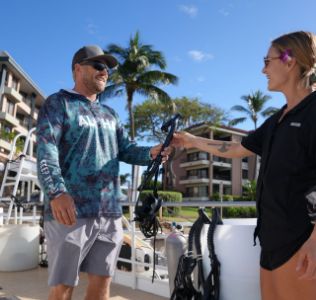
Masks
A snorkeling mask must fit your face and function properly.
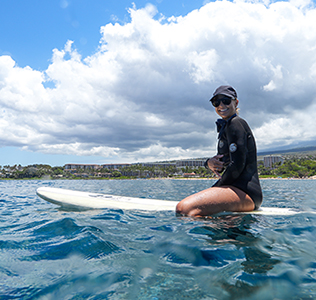
Conditions
Wind, swell, and clarity change through the day, always check conditions before you get in.
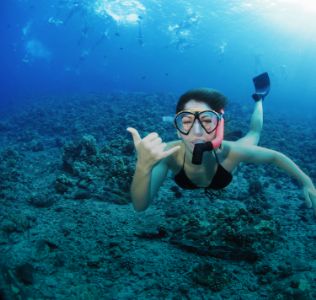
Sign language
Learn snorkeling sign language to point out a turtle to your buddy, ask for help with gear, and more.
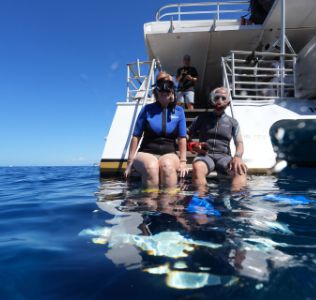
Snorkel with
a buddy
Make sure to always snorkel with a buddy to stay safe and have the best experience in the ocean.
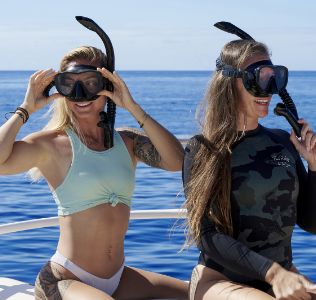
Defog
Your Mask
Defog your mask underwater or prepare your mask to keep from fogging before you enter the water.
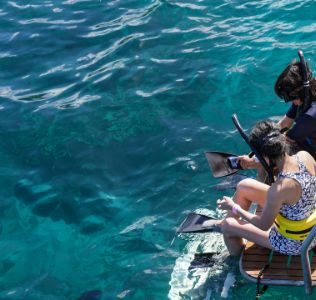
Water
Entry
Learn how to enter the water safely, whether from shore or a boat deck.
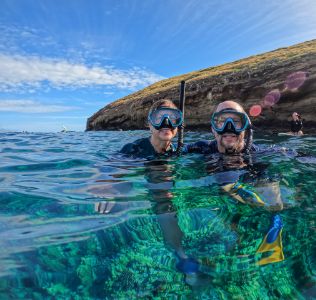
Waves
Calm waters are ideal for snorkeling. When the waves are smaller, you’ll be safer and have more fun.
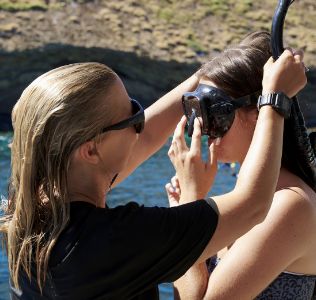
Adjusting Masks
Simple adjustments to a snorkel mask will help with comfort and better underwater vision.

Motion Sickness Precautions
It’s easier to take precautions to prevent motion sickness before it happens, rather than try to alleviate it after it starts.
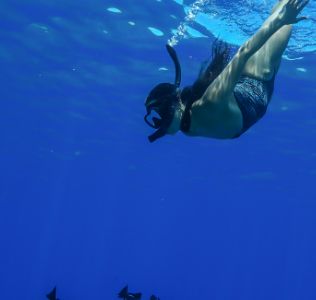
Never Turn
Your Back
The Golden Rule of all ocean play is to never turn your back to the ocean!
Snorkeling Safety FAQ
Yes. On every tour, we offer a free introduction to snorkeling that covers ocean safety basics, how to find your comfort level, and the proper use of all gear. Children should always be paired with a responsible adult in the water.
No. We regularly host guests who don’t swim. We provide several types of flotation to keep you comfortable and afloat, and we have a lifeguard in the water and crew standing watch.
Snorkeling is safe with the right preparation: checking conditions, easing into your gear, breathing easy, using flotation and a buddy, and choosing a spot that matches the day. Take your time, listen to your body, and don’t push through anything that feels off.
Mornings are usually the calmest. Trade winds tend to build as the day goes on, while light and water clarity are best closer to midday. A morning start (many Molokini tours leave around 7–9 a.m.) puts you in the water for calm conditions and good visibility, without a pre-dawn wake-up. We don’t recommend night snorkeling, and we run morning and afternoon tours only.
It can happen on any boat. Take a Dramamine or a natural supplement before heading out, stay on deck with your eyes on the horizon, and ask a crew member for fresh ginger if you need it. Ginger works wonders for many people.
Use mineral sunscreen on Maui. Maui County allows only mineral sunscreens, and Hawaiʻi state law also restricts sunscreens that contain oxybenzone or octinoxate. A rash guard is an easy way to cut down on how much you need.
Yes. Every tour includes quality gear and is guided by an expert, certified crew who’ll show you how to use it and explain underwater signals and the marine life you’ll see. Your safety is always our first priority.
- USCG-inspected vessels
- CPR/AED-certified crew
- 40 years on Maui
- Member, Hawaiʻi Visitors & Convention Bureau
- BBB Accredited
- Snorkeling safety information reviewed July 2026.
Where We Will Snorkel
Visit Maui’s top snorkeling destinations like: